 In Houston, tilt-wall construction relies heavily on the foundation. The foundation of a building might just appear to be a simple slab on concrete, but the truth is that it serves as the workbench for the entire project – supporting massive weight and requiring relentless resistance. If the slab cracks or shifts, not only are you facing a major flooring repair, but also, more importantly, compromised wall panels, crane safety risks, and a massive hit to your schedule. To avoid these expensive, budget-altering failures, it is essential to understand the specific ways that tilt-wall construction can pose a threat to your concrete and how GRA Construction finds reliable solutions to keep your project on track for success.
Tilt-wall construction can fail for a large multitude of specific reasons, but the three most common include:
- Subgrade preparation and soil integrity
- Thermal contraction and drying shrinkage
- Heavy equipment and rigging stress
How Tilt-Wall Demands More from Concrete
Unlike traditional construction, when the concrete slab’s only real role is to support the weight of the building, tilt-wall construction must operate as a high-traffic industrial workspace before a layout is even set. Because of this, the slab’s design must withstand extreme crane weight hotspots and specific chemical washes for curing wall panels—all while maintaining perfectly flat levels. The bottom line: treating a tilt-wall foundation like a typical commercial pour allows the ’tilt’ process to dismantle the foundation’s structural integrity completely.
Why the Finish of the Slab is Critical for Panel Release
The most essential aspect of a tilt-wall construction foundation is the finish. This is because the slab acts as a casting bed or mold for the wall panels, so even small flaws, textured spots, or contaminants in the concrete can immediately transfer to the face of the wall panel poured on top.
A rough surface or a poorly applied bond breaker can fuse the panel to the slab, causing the wall to crack, shatter, or lift the slab during the tilt-up. Typically, this results in the wall panel cracking, shattering, or ripping apart. From here, the two primary outcomes include:
- Panel damage: Including structural cracks or loss of surface integrity on the wall panel – most often requires demolition.
- Slab damage: These errors often cause significant, deep cracks or spalling, requiring a full repair before the project can continue.
Tilt-Wall Subgrade Preparation and Soil Integrity Failures
This is the most common, yet often overlooked, cause of foundational cracks due to tilt-wall construction. The culprit: the very soil that lies beneath the slab. The bottom line is that a foundation is only truly as strong as the soil beneath it, making Houston commercial construction projects uniquely challenging. This is largely because Houston is known for its vast amount of clay-based soil, oftentimes called “black gumbo”.
What makes clay-based soil tricky for construction is how it reacts to moisture. When it becomes wet, it exponentially expands and becomes extremely slick – typically resulting in shifts and large amounts of instability. Additionally, when it gradually dries out and contracts back to its original size, this can cause large cracks to form during the process. This instability can lead to a large amount of inevitable, load-induced cracking, especially in commercial tilt-wall construction.
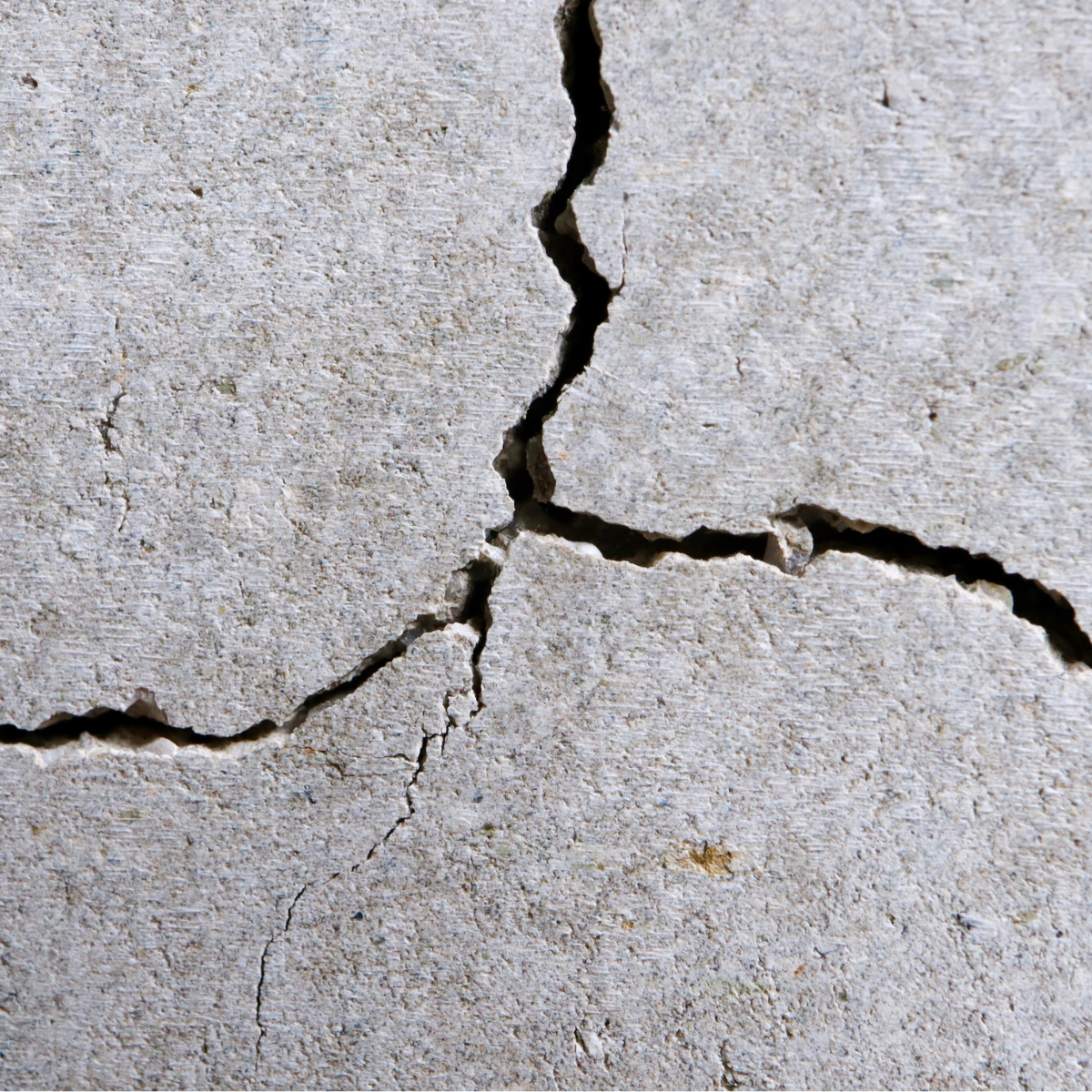
Houston’s soil often causes poor compaction, which creates unstable foundations. When workers fail to compact the soil to the required density, the ground develops air gaps. When heavy machinery like cranes or cement trucks rolls over the gaps, the immense weight can lead to void compression and uneven slab sinking. Because concrete is inherently rigid, this often leads to complete, detrimental cracks that compromise a foundation.
Thermal Contraction and Drying Shrinkage In Tilt-Wall Concrete
While subgrade preparation and soil integrity are the most common factors when it comes to Houston tilt-wall construction failure, another common factor is thermal contraction and drying shrinkage. This is because the moment concrete is poured into a slab, the slow, sometimes months-long drying process begins. Over time, this process slowly forces the concrete to shrink, creating a rigid, compact, and sturdy slab. Cool, dry temperatures primarily drive the curing process; however, if the top dries faster than the bottom—due to overheating or high humidity—it creates upward tension, known as the “curling effect.” The biggest failure that this effect can cause over time is random cracking, which can be especially dangerous during the meticulous process of concrete tilt-wall construction.
Heavy Equipment Induced Tilt-Wall Failure
The real test of the integrity of a tilt-wall project is the lift, when the foundation must fully transition from a smooth, unified slab to a heavy-duty structural support system. Sometimes, the concentrated, extremely heavy force can push a concrete slab past what it can structurally resist – leading to a large, irreversible break in the concrete. The biggest factors when it comes to heavy equipment-induced tilt-wall construction failure are the placement of the crane and the bracing system. If the slab doesn’t meet the crane’s placement requirements, the significant and highly dynamic force will break it every time. Many times, the bracing system itself can also be a factor in whether a concrete slab fails or succeeds through the tilt-wall construction process. This can be improved using temporary bracing to keep the panel stable before the roof, and structural steel is installed.
How GRA Construction Can Prevent Tilt-Wall Failure
Cracking doesn’t have to be an unavoidable aspect of Houston tilt-wall construction. The truth is that GRA Construction in Houston can help avoid this costly mistake by following two key steps that aid in securing and protecting the concrete foundation. The first is having an accurate pre-pour checklist that includes things like soil testing, mix design verification, and weather monitoring to ensure that the composition, soil, and curing process are precise and are able to set your construction project up for optimal performance. Second, we use advanced, top-of-the-line curing compounds to ward off avoidable cracks. At GRA Construction, our team is composed of experienced concrete slab technicians who understand Houston’s unique soil and how it can impact the quality of your project. Because of that, we approach every project with meticulous planning, detail-oriented service, and careful attention to detail.
The truth is that cracking is almost always preventable during tilt-wall construction by mitigating problems before they occur. When it comes to tilt-wall construction, the foundation is the key indicator of a project’s overall smoothness and general success, so by choosing a team that understands the key factors in achieving a smooth, flawless foundation – you can set your project up for ideal results. If you have a future commercial tilt-wall project on the horizon, working with GRA Construction in Houston is the most reliable way to ensure your foundation remains sturdy from start to finish. Contact us today for a free tilt-wall construction estimate.